Nasa rover detects potential signatures of ancient microbial life on Mars
What if we are on the brink of discovering evidence of ancient life beyond Earth?
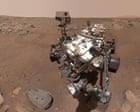
NASA's Perseverance rover has made a groundbreaking discovery that has scientists buzzing with excitement. It has detected complex carbon molecules in Martian rocks, particularly those from a riverbed that once carried water billions of years ago.
Why does this matter to you? Understanding whether life ever existed on Mars could reshape our comprehension of life's origins and the possibility of extraterrestrial neighbors. The findings could also inform future missions, guiding humanity in its quest to explore the cosmos.
The rover's Sherloc instrument, designed to look for signs of life, identified organic carbon molecules in mudstones from the Bright Angel region. These molecules are critical because they are often linked to biological processes.
While this discovery is not definitive proof of ancient microbial life, it opens a tantalizing window into Mars's past. The presence of water and organic compounds suggests that conditions may have once been suitable for life—an idea that has captivated scientists for decades.
As researchers sift through the data, they hope to uncover more clues about the planet's history and its potential to host life. What other secrets lie beneath the Martian surface, waiting to be revealed?
The mystery of Mars continues to unfold, and with each discovery, our understanding deepens. This new data is likely to fuel ongoing debates about life on other planets, pushing the boundaries of what we know.
For the latest verified details on this exciting development, be sure to check out the full report at the source.
The Guardian · ✦ 24ScopeNews AI